World War: Army Battle FPS 3D
- 4.3
- Rating
- 100.00M
- Installs
- Free
- Price
 Analysis by App-foxy
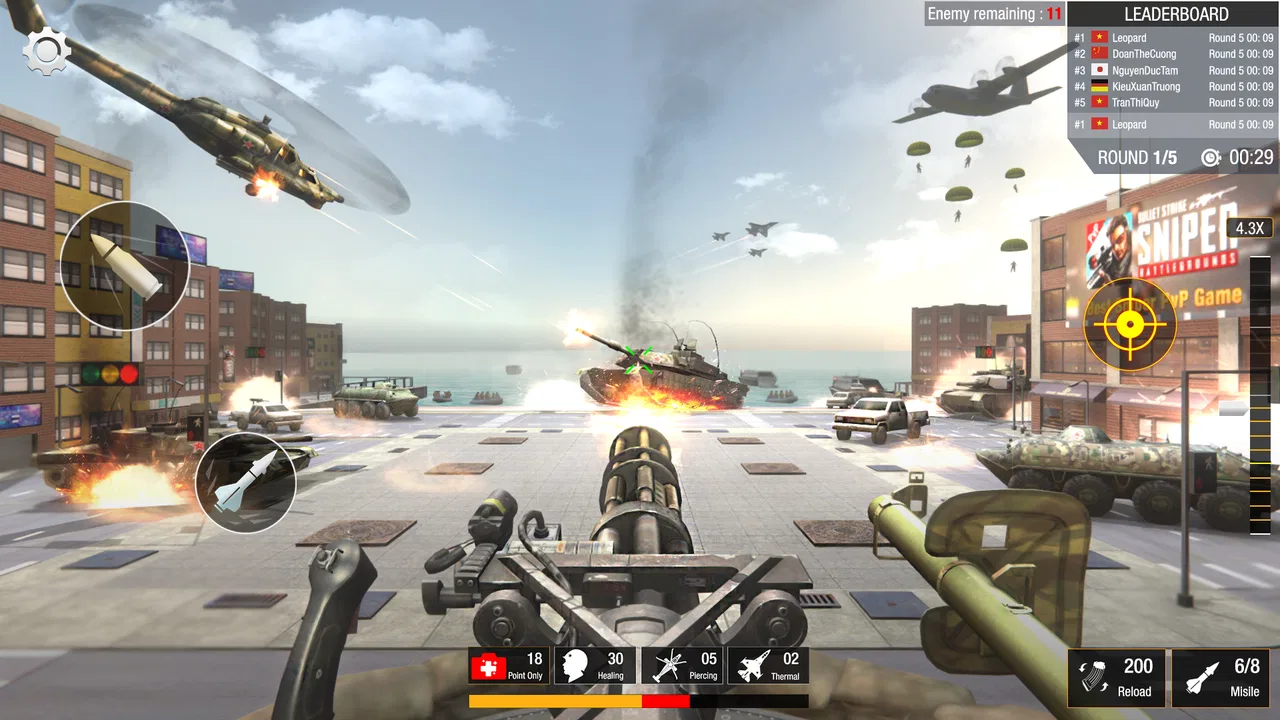
I approached World War: Army Battle FPS 3D expecting a straightforward mobile war shooter, and that is still the best way to understand it. It is an action game from Horus Entertainment that puts the focus on first-person shooting and battlefield progress rather than on a quiet, story-led experience. I found it easiest to enjoy when I treated each session as a short burst of combat instead of expecting the depth of a full console campaign.
The game is free to install and aimed at Teen players, with optional purchases ranging from $1.49 to $104.99 per item. That combination matters because the initial download is easy to try, but players who dislike in-app purchase prompts should pay attention to the store and game screens before spending. The game has built a large audience, with over 100 million installs, a 4.3 average from around 281 thousand ratings, and about 4.9 thousand written reviews. Those figures suggest broad appeal, although popularity alone does not guarantee that its controls or pace will suit everyone.
Getting past the first points of friction
The first place I would expect a new player to get stuck is not the shooting itself but the transition between downloading the game, opening it, and understanding what the next tap is supposed to do. Mobile action games often place several buttons close together, and a player who is used to touch controls can still need a few minutes to learn the visual language of the screen. I recommend beginning with short sessions and using the opening moments to identify movement, aiming, firing, and any button that advances the current objective.
You May Also Like

 Blood Strike: 2.5 Anniversary
Blood Strike’s Loadouts Turn Every Drop Into a Tactical Gamble
A close look at Blood Strike’s custom loadouts: how fast access to signature weapons reshapes its battle royale rhythm, rewards preparation, and narrows the gap between fights.

 Pandora - Music & Podcasts
Pandora’s Music Is Easy to Start, but Harder to Recover
Pandora’s strength is its low-effort path from a seed to a station. Its weak spot is how much confidence it asks you to place in connection, setup, and quiet recovery.

 8 Ball Pool
 Is Built on Rivalries, Rematches, and Routine
A close look at the rivalries, rematches, shared routines, and unanswered safety questions that turn a quick pool match into a persistent mobile community.

 Samsung Music
’s Quiet Strength Is Playing What You Already Own
Its reach comes less from spectacle than from dependable access to a personal library. That simplicity is both the app’s strongest retention engine and its ceiling.

 AccuWeather: Weather Radar
AccuWeather Review: A Quick, Clear Forecast for Everyday Decisions
For everyday plans, the best forecast is the one you can understand quickly. AccuWeather makes rain timing, radar, and local conditions easy to act on, with a few trade-offs.

 Hill Climb Racing
Why Hill Climb Racing Still Turns Crashes Into One More Run
A tiny car, a bumpy hill and one more upgrade: Hill Climb Racing keeps resurfacing because its simple chaos makes every near-miss feel personal.
More From Our News Desk
View All News


That sounds basic, but it prevents a common mistake: changing several controls at once before knowing which one is actually causing trouble. If aiming feels uncomfortable, adjust one setting or one habit, then test it in another encounter. If movement is the problem, concentrate on keeping the movement thumb steady while using the other hand for aiming. Making multiple changes at once makes it difficult to tell whether the game improved or whether the player simply became more familiar with it.
My strongest practical tip is to avoid judging the game during the first few minutes. A first-person shooter on a phone can feel awkward until the player develops a rhythm for looking, moving, and firing. I found that the game becomes more readable when I stopped trying to react to everything immediately and instead watched the screen for the next clear threat. That small change reduced accidental taps and made the action feel less frantic.
Another useful habit is to play while holding the phone in a stable position. On a larger device, reaching across the display can make aiming inconsistent. On a smaller phone, covering part of the screen with a finger can hide important visual information. I would not make a purchase or decide that the game is unplayable until testing the controls with the device held in the position I would normally use.
The World War setting also creates an expectation that every moment will feel like a dramatic historical campaign. In practice, I think the better comparison is a compact mobile FPS built around repeated combat encounters. That distinction helps set the right expectations. Players looking for quick action can settle in quickly, while players who need a detailed historical narrative may find the experience lighter than they hoped.
Checks worth making before blaming the game
When a game does not open cleanly, stalls during a transition, or behaves inconsistently, I start with ordinary setup checks rather than assuming the installation is damaged. I close other demanding apps, restart the phone, and make sure there is enough free storage for normal system operation. These steps are not specific fixes for every problem, but they remove common sources of instability without changing the game or risking progress.
I also check the operating system before installing. This title supports Android 7.0 and later, so an older device may be outside the supported range. A phone that technically opens the game can still provide a poor experience if its hardware is limited, especially during busy action scenes. In that situation, lowering expectations about responsiveness is more realistic than assuming every pause or delayed input comes from the game itself.
Connection quality is another early check. Even when a player is not thinking about online activity, a weak or changing connection can interrupt loading or make a transition appear frozen. I test the game on a reliable connection, avoid switching networks during startup, and wait briefly before repeatedly tapping the same button. Repeated taps can make it harder to tell whether the screen is processing an action or simply has not responded yet.
Battery condition and heat deserve attention too. I avoid starting a long session with a nearly empty battery or while the phone is already warm from another game. A hot device may reduce performance to protect itself, which can look like a sudden problem with the app. Removing a thick case temporarily, closing background tasks, and letting the phone cool are sensible checks before reinstalling anything.
Because the game is free, it is tempting to install it quickly and start playing without considering storage, system version, or purchase controls. I would take a minute to review those points first. The optional purchase range is wide enough that families sharing a device should also make sure the person playing understands that free installation does not mean every item inside the game is free.
Recovering a session without making the problem worse
If a session stops responding, my recovery order is deliberately simple. I wait a moment, leave the current screen if the game allows it, and then restart the app normally. If that does not help, I restart the phone and try again with other apps closed. I avoid immediately clearing storage or uninstalling because those actions can remove local settings or progress, depending on how the game handles saved information.
This is especially important for players who have already spent time improving their performance. Before taking a more drastic step, I would note the account or sign-in method used by the device, if one is present, and confirm what the game shows when it starts again. I would not assume that reinstalling automatically restores everything. A clean reinstall can solve corrupted local files, but it should be treated as a later option rather than the first response.
When controls seem to stop working, I first check whether a finger is resting on another part of the display or whether the phone has registered a swipe instead of a tap. Cleaning the screen and removing anything that interferes with touch input can help. I also test the device outside the game. If taps fail in other apps, the more likely cause is the phone, screen protector, or touch hardware rather than this particular shooter.
A useful recovery workflow is to change only one variable per attempt. First try a stable connection. Then try a cooler device. Then close background apps. If the issue remains, restart the game. This approach takes slightly longer than randomly tapping and reinstalling, but it gives a clearer answer and avoids turning a small temporary issue into lost settings or unnecessary downloads.
I would also avoid judging a weapon or control change after a single encounter. A new setup can feel worse simply because the player has not adapted to it. I give myself several minutes of consistent play before deciding whether the change helped. That is a more reliable test than switching back and forth after every mistake.
When the game is not really the cause
Some complaints that appear to be about the app are actually caused by the environment around it. If the phone is using an older operating system, has very little free space, or is already struggling with other applications, performance may suffer before the game has a fair chance. The same applies to unstable Wi-Fi or mobile data. A player should test those conditions separately instead of treating every interruption as proof that the game is broken.
Touchscreen habits can create another false diagnosis. Players coming from a controller or mouse may press too firmly, drag too far, or cover the aiming area. I found that a lighter touch and slower initial movements made the controls easier to read. This does not transform the game into a controller-based shooter, but it can make mobile aiming feel less frustrating.
Notifications and accidental gestures are also easy to overlook. A message banner, edge swipe, or incoming call can interrupt concentration at exactly the wrong moment. For an important session, I use a quiet environment and keep the phone positioned so that my palms are not touching gesture areas. That is a general phone-use adjustment, but it has a direct effect on a game built around quick visual reactions.
Players should also separate difficulty from malfunction. Missing shots, losing track of an opponent, or failing an objective does not necessarily mean that aiming is broken. I look for repeatable signs such as the same input failing in the same way across multiple attempts. If the issue is inconsistent and disappears after cooling the phone or closing other apps, the surrounding device conditions are more likely involved.
The same careful thinking applies to purchases. If an item appears unavailable or a transaction does not complete, I would check the device’s app-store account and payment settings rather than repeatedly pressing the purchase button. Since the game contains optional items with different prices, keeping purchases deliberate is better than treating a prompt as part of the action flow.
How it fits into everyday play
I see this game working best for someone who wants a war-themed FPS that can be opened for a short break. For example, I could play during a commute stop or while waiting for an appointment, complete a few combat-focused moments, and put the phone away without needing to reserve an entire evening. The free entry point makes that kind of trial practical, provided the device meets the operating-system requirement and the player is comfortable with optional purchases.
It is less convincing as a replacement for a long-form campaign on a console or computer. Those alternatives usually offer more precise controls, a larger presentation, and a deeper sense of progression. A dedicated competitive shooter may also be a better choice for players who care most about balanced multiplayer competition and highly tuned controls. Here, the appeal is convenience and direct action on a phone, not a complete substitute for every kind of war game.
The Teen rating is worth considering before handing the device to a younger player. The military setting and shooting focus are central to the experience, so parents should make their own decision rather than relying only on the fact that the game is free. I would also explain the in-app purchase model clearly to anyone sharing the phone, especially when payment details are already attached to the device.
One trade-off I noticed is that the game’s straightforward action makes it easy to start but gives the player less reason to slow down and study the world. That is a strength when I want immediate combat, but a weakness when I want exploration, character development, or a carefully layered story. Knowing which of those moods I am in determines whether I enjoy the session.
My practical verdict after using it
World War: Army Battle FPS 3D is a sensible download for Android users who want a free, accessible action shooter with a World War setting and do not mind learning touch controls. Horus Entertainment has positioned it for a broad mobile audience, and the large install base reflects how easy it is for curious players to try. I would begin with realistic expectations: this is a pick-up-and-play FPS, not a detailed simulation or a console-scale campaign.
I recommend checking the phone’s Android version, available storage, connection, temperature, and touch response before deciding whether the game runs well. If something goes wrong, restart gradually and avoid deleting local data as a first step. Those small precautions address much of the friction that can make a mobile game seem worse than it is.
My final view is positive but conditional. I would recommend it to a friend who enjoys short bursts of shooting and wants a free starting point. I would steer away a player who dislikes in-app purchases, needs extremely precise competitive controls, or is mainly searching for a historically rich story. The best reason to try it is convenience; the main reason to skip it is expecting more depth than a mobile action shooter is designed to provide.
FAQs for World War: Army Battle FPS 3D
01What is World War: Army Battle FPS 3D about?
World War: Army Battle FPS 3D is an immersive first-person shooter game where players engage in intense battle scenarios set during World War II. The game features realistic graphics, historical weapons, and strategic gameplay, offering both single-player campaigns and multiplayer modes to challenge players worldwide.
02What devices are compatible with World War: Army Battle FPS 3D?
World War: Army Battle FPS 3D is available for both Android and iOS devices. It requires a minimum of Android 5.0 or iOS 11.0 to run smoothly. For the best experience, a device with a high-performing processor and sufficient RAM is recommended to handle the detailed graphics and fast-paced action.
03Are there in-app purchases in World War: Army Battle FPS 3D?
Yes, World War: Army Battle FPS 3D includes in-app purchases. Players can buy various items like advanced weapons, armor, and power-ups to enhance their gameplay. While the game is free to download, these purchases can provide a competitive edge or aesthetic customization for your character.
04Does World War: Army Battle FPS 3D require an internet connection?
World War: Army Battle FPS 3D can be played both online and offline. The single-player campaign mode is available offline, allowing players to enjoy the game without an internet connection. However, multiplayer modes and certain features require an active internet connection to connect with other players.
05How can I improve my skills in World War: Army Battle FPS 3D?
Improving in World War: Army Battle FPS 3D involves mastering both strategic planning and shooting accuracy. Players should familiarize themselves with the maps, practice aiming, and learn the strengths and weaknesses of different weapons. Joining a clan or team can also provide valuable tips and strategies from experienced players.
Pros
- Immersive graphics enhance gameplay.
- Wide range of weapons and upgrades.
- Engaging multiplayer modes available.
- Regular updates with new content.
- Responsive controls for smooth play.
Cons
- In-app purchases can be pricey.
- Occasional server connectivity issues.
- Ads can interrupt during gameplay.
- Requires a stable internet connection.
- High battery consumption during use.

World War: Army Battle FPS 3D
Gallery